Category: Life
The Journey Of Dolore Pinkerton And Emma S
In class we’re given a minute and a half to think up a list of emotions. The guidance counselor tells us: “if it makes you feel, you can think of it as an emotion.” In ninety seconds I have eighteen emotions. After classifying them into columns labeled “positive” and “negative”, I realize that thirteen of my eighteen belong to the latter category. For some reason this isn’t shocking at all. When our guidance counselor asks us to read one of our emotions aloud, I am the last one to go. In a sprawling hand, he writes the words my classmates throw at him. “Surprise”, “hope”, “love”, rubbing elbows with sadder counterparts, “melancholy”, “sadness”, “anguish”. It occurs to me that I might choose any adjective I like, as long as it falls into the realm of human emotion. For a brief moment, I consider “joy”. But it’s not a word that belongs to me. In the end, when his eyes turn to me, I speak the truest of them all: “soledad“. Solitude.
The stepmother’s mirror speaks to me: no, no, that’s not exactly right is it, Emma! There’s something else, a better answer. Shut up. For once I am not a liar. In Spanish we do not differentiate between “solitude” and “loneliness”.
Our guidance counselor tells us it’s good to speak what we feel. But I do not.
A few months ago a classmate asked me if there was anyone I could confide in. “Is there anyone you tell everything to?” The question caught me completely by surprise. I suddenly understood that, whether he’d realized it or not, he’d seen through my ruse. Despite my chatter, urchin smiles and exaggerated gestures, all carefully calculated to inspire amiability and a certain degree of tenderness, he’d noticed the inescapable patterns of my behavior. He’d seen how little I shared however much I babbled, how I’d adopted the strategy of “a good attack is the best defense”. In my shock, I answered that I didn’t have anything to tell. I actually said that, in spite of dreams in which I wandered concentration camps bathed in the light of an orange moon, utterly alone, dreams in which I faced dragons and faceless assassins all on my lonesome. “No tengo nada que confiar.” I have nothing I to confide. My God, how is it possible that I was able to say that with a straight face?
In “Madame Butterfly”, Cio-Cio-san kills herself upon the discovery that her precious husband has betrayed her, spitting on the faith she’d kept alive despite years and an ocean’s worth of distance. She covers her baby boy’s eyes and gives him a little American flag to hold. Then, as she stabs herself, we hear the voice of her beloved Pinkerton coming up a hill, crying Butterfly! In these moments, it’s never for Cio-Cio-san, the butterfly, that I feel most sorry for. It’s for the boy blindly waving the flag of his father’s country, a boy she’d named “Dolore”. Dolore, in Italian, meaning “sorrow”.
Dolore and Soledad, we make a pretty pair, don’t we? Sorrow and Solitude, looking down on a sweeping bay on a golden spring morning. But when the opera finishes, I always wish desperately for Dolore’s happiness, regardless of the juxtaposition of emotion there. I press a fist to my mouth and pray he’ll someday be bold and bright. In Act 2, in fact, his mother says: the day Dolore’s father returns, his name will be “Gioia”. When “Madame Butterfly” ends, his mother is dead and his father is no great tiding. But still I hope he’ll be the Gioia he should be, on his own account, out of his own bravery and strength.
Then he’d be Gioia and I’d be Alegría, and we’d be on our own ship, leaving that bay, holding tight and looking forward, pointing at the horizon like children point at flocks of birds. Gioia and Alegría – different languages, but they both mean so much to me. They are both Joy.
NEVER BREAK THE CHAIN
In class we read “Funeral Blues” by W.H. Auden. “Pack up the moon and dismantle the sun” reads the boy directly across from me. Then he looks up and asks, almost angrily, as though haven bitten into a rotten apple: “how can you dismantle the sun?”
Some time ago I taped up a photograph of my brother on my bedroom wall. The photograph was one of the many copies he’d made for a class project and left all over the floor. I carefully added it to the drawings and print-outs of poems I’d added to my wall over the previous weeks. My mother had mentioned this collage only once, and that was to voice her disapproval. “Tengo ya demasiado para que conviertas tu habitación en un museo,” she’d said. “I have enough already, for you to go and turn your room into a museum.” But on this occasion the photograph of my brother, smiling in a garden rendered unidentifiable by our elderly printer’s manic bursts and stutters, made her pause.
“You really love him, don’t you?”
I looked at her, perplexed. Love was not the reason I’d taped up the photograph. The two things, “love” and “photograph” felt unconnected to me. My mother’s comment, however, brought into my world a sudden and very tenuous link between them, twins separated at birth meeting for coffee. It made me look at the photographs of me, placed around the house in silver frames, in a new light. Flipping the laminated pages of albums became like a trip through a dream. If it unnerved me before, to see past versions of myself in lace dresses, absorbed in paintings, reclining on grassy fields – now I’m horrified by it.
Sometimes my mother holds a photograph of me close to her face, something I’d always interpreted to be more out of poor eyesight than affection. She traces the line of my cheek and says little words of endearment: cariño, amor, sol. Mi sol. My sun. The sun, eight minutes away at light speed, but still nearly 164 years away at 65 miles an hour, which is as fast as my mother is willing to drive. “How can you dismantle the sun?”
There I am, sitting on the night table, eight years old and playing the princess in “Emperor’s New Clothes”. There I am again, on top of the shoe closet, leaning against a wall in my elementary school uniform. And again, next to my mother’s red jewelry box. And again, glued to the computer monitor at her workplace. I need to be rid of these photographs. Sometimes my despair is so great I seriously consider taking the kitchen scissors to them, chopping my body into ribbons of glossy paper. “Love” and “photograph”, this makes as little sense to me as the dismantling of the sun did to my classmate. The sun and its termination shock, the point where solar winds slow down and stop, a point whose location is a mystery even to the most dedicated of scientists. God, all those photographs, framed and hung like letters salvaged from an ancient Countess’s boudoir. I want to grab my mother by the shoulders and scream: This is not how you love someone!
(title taken from “The Chain” by Fleetwood Mac. It’s also what I was listening to throughout the writing of this sordid, miserable tale)
Childhood
Seven days after my seventeenth birthday, April 11th of this very year, my childhood came to an end.
At the time I would’ve have perhaps have said something as dramatic as “my childhood died”. But please don’t think too badly of me for it. It sure felt like death, then.
My greatest fear is that my feelings are not genuine. I doubt the sincerity of my thoughts and actions at every hour of the day. When I think, are these thoughts true or just what I wish I would think? When I move, are these movements real or do they just take me where I wish I had the guts to go? When I feel, are these feelings born in pulpy mass of my heart, or deep in my prefrontal cortex? I can’t put any sort of faith into the steps I take, nor the sounds of my throat. I don’t part with even small bits of myself wholeheartedly. “Wholeheartedly”? Emotions don’t possess me, and I miss this secret fervor, this fervor that I witness from far away with a wan smile: girls hugging in photographs, a boy crying at the movie theater, a woman begging a medium to let her speak to a deceased child. “Wholeheartedly”? Every single time I’ve said I was moved by something I have lied.
There have been a few moments in my life in which I have known with certainty: ah. Ahh. This is real. These moments occupy a definite place in me, and I could not bear to lose them. Even if I were stricken with amnesia after a freak automobile accident, like the beautiful heroine of a primetime soap, I couldn’t possibly forget: watching a videotape of my baby brother playing with the balloons floating over an air vent, and then looking up to see that same brother, eight years older, brushing away the tears from his eyes.
When classmates ask me what I want to be when I grow up, the answer is different each time. “A biologist in Antarctica”, “a Tibetan monk”, “a missing person” all half-truths! It’s hard to feel something real, or feel for something real.
I have a theory: a person’s childhood ends when they come to understand their parents. I think I gained that knowledge on April 11th. It was knowledge that made me weep like a madwoman for hours. I have a theory: part of a person dies when they spend an entire night crying without anyone noticing.
I’m not going to lie. A lot of this has come about due to my mother’s bipolar disorder. I’ll never forget the summer of ’09. My mother’s illness brought upon me an awakening of sorts. It was in 2009 that I first became terrified that my feelings are not real. But I’m ready now, to accept what has happened, and I’m ready to do what I can to help not only myself feel, but those who surround me. In a way, I’m grateful I have gone through this. I never would have put so much stock into the importance of feeling, otherwise. I never would have decided what my aim in life is, either. It’s not “a biologist in Antarctica” or “a Tibetan monk” anymore. It’s definitely not “a missing person”. I think I have been “a missing person” for many years now, and I’m ready to give that up.
Now, when classmates ask what I want to be when I grow up, the real answer is always “a good person”. I have spent my entire childhood being the Cowardly Lion, letting others step up and put their own brave (impossibly brave!) hearts on the line. I don’t just want my feelings to be real, I want to be proud of them.
My childhood ended because I finally understood my parents. My father became a man, and my mother a woman, both of them flawed, both of them humans who have spent many years of their lives teaching me. Today, I feel like a historian that looks at a set of hieroglyphs for the hundredth time and finally understands what they mean.
I am not a child anymore. As an adult, I won’t ask for anything I can’t give myself. So while I am still here, crossing over, let me make one last plea to the universe: if I have lost something now, please let me gain something else. If my childhood is over, if time has switched eras and changed this place, this way I live, allow me to win for myself something different, something new, something that will make me think ah, this is real! If all goes well, maybe something that will help propel me to my goal, my hope of being “a good person”. It doesn’t have to be now, just sometime, someday, if you’d be willing to oblige me. For once, I can say, genuinely, sincerely, wholeheartedly: this is something I would really love.
Woman
Every so often I put one hand on the waistband of my jeans and pull as hard as I can. I’m in Language Arts class, and my teacher is teaching us the key elements of Renaissance art. She opens a book wide and holds it over her chest so we can all see. A photograph of Bosch’s “The Garden of Earthy Delights”, the colors glowing deeply in the dim light. Like excavating a hole through the inner substance of the Earth and seeing, down and past the column of basalt, the flush of red-hot magma.

“The Garden of Earthly Delights” is a work of art divided into three sections (commonly known as a “triptych”). Painted half a millenium ago by an aging Dutchman, it features representations of Paradise, Earth and Hell.

In the middle panel, the depiction of a scene from Earth: naked youth wade in silver pools and feed themselves from the beaks of birds. They lie in groves of over-sized fruit, cradling blueberries and roses, carrying lovers encased in cracking eggs. A man reaches down to grasp the fingers of a woman submerged in water. In a grove of trees another steps forward with one hand extended. It’s all rosy pink domes and spring green buds. Females crow and cry, lying in the pool that lies in the center of a great circle of men.
The hand goes to the waistband again, fixing the fit because I’m terrified the boy behind me will see my beige underwear and think it’s something I’m putting in front of him on purpose, that it’s something I wish for him to see. My pants are a size too big, constantly slipping below the safe line of my hips and into dangerous contours. No doubt my male classmate knows these places well enough. Perhaps he’s even touched them before, or at least simulated the experience, using a pillow as a proxy. I’m sure he has seen more than enough of his fair share of porn. I imagine him leaning towards the thumping screen, watching the maid-cum-temptress peeling off purple Lycra underwear. Hoisting sweatpants up with babyish hands, I doubt I make the same kind of impression. Still, I can’t bear the thought that he’ll think I’m trying to seduce him.
In the left panel: in the Paradise of Eden, Adam awakens to find God with His fingers on Eve’s wrist. There are dozens of magical animals, and the horizon is not a threat, as it sometimes is on Earth, but the promise of bright mountains and brighter air. But I imagine Eve does not notice that, not at this moment, with God’s fingers finding her pulse. How does she feel, I wonder, about this brief physical contact with the divine? Does she thrill at the touch? Is she horrified by it, as young children sometimes fear encounters with respected elders? Does she tell Adam about it later, about the texture and temperature of a holy hand? Or is speaking her feelings only betraying the role she has?
When I was a child, my mother spent hours brushing my hair. She’d sit me on a stool in the kitchen or in the living room, picking at the tangles while she watched Law & Order, or ER. Day in and day out, she’d wave away my protests, saying I couldn’t go to school looking like a mongrel. As the years passed, the word changed, going from “mongrel” to “witch” to “trucker”, and, on several memorable occasions, to “guarra”. The Spanish”guarra”, meaning filthy, disgusting, pig, a slut. “La guarra de tu hermana”, your slut of a sister. “La guarra de tu hija”, your whore of a daughter.
Sometimes, in her own way, my mother apologizes for these instances. She asks, “did it hurt when I brushed your hair?”, assuming I’ll remember even though it’s been at least half a decade. When I shrug, she nods to herself, answering for me that “it did, didn’t it. It did.”
Once I heard one of my classmates talk about a teen model he knew. He compared her to other girls as though he were at a furniture store, feeling up bedsheets, or picking lampshades in his favorite colors.
“She was gorgeous,” he says, “much better that any of the chicks here. Well, maybe she was a bit unattractive when she was wearing those glasses of hers, but without? Wow, that’s all I’ve got to say.” He could’ve been at a Home Depot, fingering the shiny tassel on a set of curtains.
I know the structure of the human genome allows no space for philosophy. I know how little separates us from peacocks and lions. I know that much of human superiority is based on fable. But still I couldn’t control how viscerally I reacted to the idea, this idea of a model and I, pinned to walls like butterflies, or lists of things to do. And this classmate of mine, a boy no older than seventeen, looking up at us from a swivel chair, occasionally reaching up to place his hands on our wrists.
I am not responsible for the genetic recombination that occurred in my parent’s gametes. It is not my fault the biological lottery didn’t see fit to give me blue eyes or my grandmother’s nose. It is not my job to scavenge for the beauty I do not possess. But that is what I will inevitably do for the rest of my life.
In the right panel: a hellscape, an illustrated Fall of Man done up in black, brown and ochre. A fellow’s legs are rotting tree trunks. Naked men fall in holes in the ice, knights are devoured by packs of wolves. Black arms pin a woman down. What little light there is comes only from fire. Somewhere, a man is being punished for lust, and a woman is being punished for being the origin of that lust.
The empty apartment of Man, and woman in the mirror, one leg slung over the basin. Woman in the walls, painting her lips and lids red, woman bent over a coffee table, searching the skin of her guests for imperfections. Woman hidden in a cupboard, weeping at clothes too small and breasts too large, woman underneath a bed, popping pimples. Woman hanging at the windows, like curtains, clenching her thighs so you won’t see her stretchmarks.
When I ask a classmate why she wears make-up, she answers, “I want to feel beautiful.” It’s something I want, too. But I don’t want it like this. I won’t climb these stairs with rotten tree trunks for legs, just to reach that glade where men will circle me blindly. I won’t hang my naked body at a window, hoping some one will take me home.
The value of a woman: is it something that can be put down to size and shape? Can you fetch a better price by shaving, painting, stripping or reconstructing your body? If a young girl commits suicide because she is not lovely enough, is this a justifiable loss, like bulldozing a house no one is willing to buy? Are our appraisers those boys at the backs of buses, affixing adjectives to our parts, bumping up the figure according to their desires? If I go to school with a hat covering tangled hair, will they sigh and call me “guarra”? How far am I to carry the role of “eyes downcast, look pretty”, à la Eve? If I bare my underpants to the classmate seated behind me, will he find me more valuable? Does he understand that I am not meant to satisfy his aesthetic sense? Does he understand that women are not meant for men?
“The Garden of Earthly Delights” is a beautiful painting. But just as women are not walls nor windows, just as they are not hair nor scarves, they are not paintings. They are never paintings.
A big thank-you to whomever submitted this for Schmutzie’s Five Star Friday, 147th Edition! Very kind of you, dear anonymous. Yayyyy.
Unnamed #7
Talking to you is like cream crackers for dinner. It’s quaint, but never entirely satisfying. Still, often I find myself rising from my bed in the dead of night and snaking into the pantry. I’ll stick my hand into a cardboard box, sit with my back to the wall, and devour cracker after cracker. They sit painfully in my digestive tubes, impairing my sleep patterns and leaving me with colorful, meaningless dreams. You have filled my esophagus with feelings that have too much texture and too little substance.
Why Theseus Left Ariadne
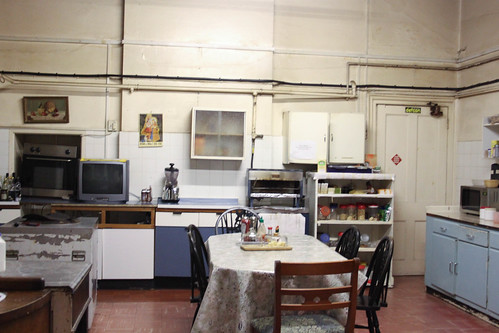
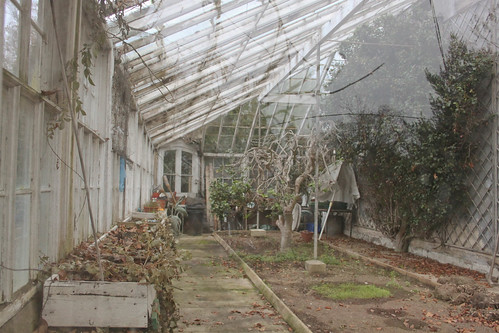
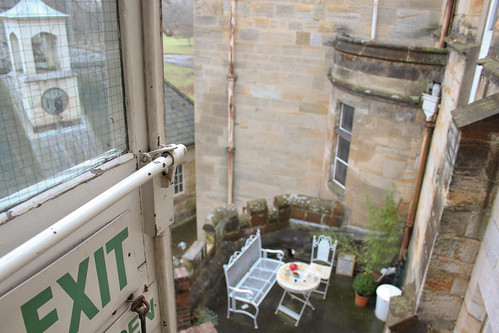
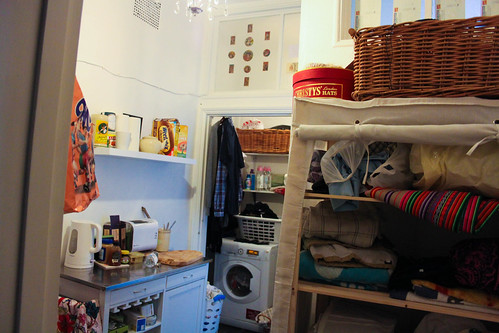
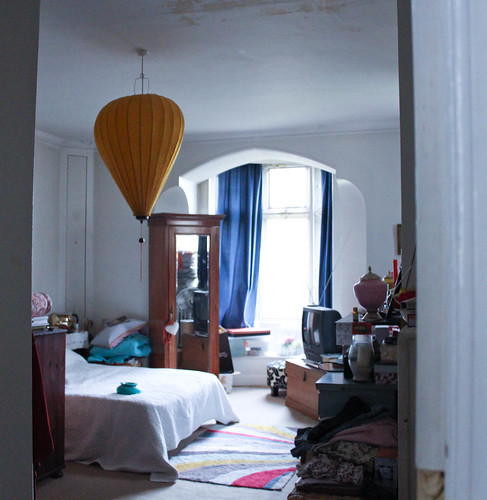
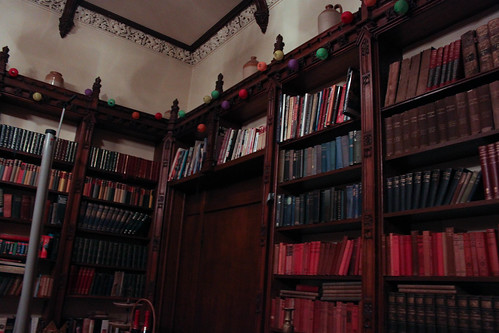
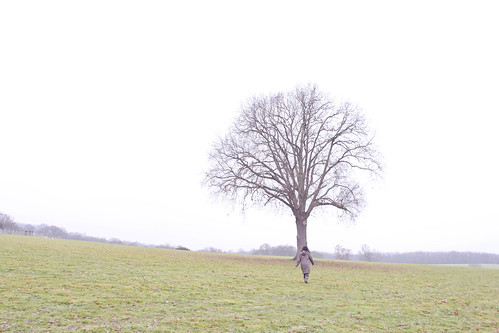
She was not good enough.
Bipolar Part 4 of ∞
Dirección General de Tráfico suggests adding “Aa” in front of the name of one of your contacts in your phone address book. In case of an accident, whether its cause is recklessness or force majeure, use of this safety measure can quicken identification and treatment. “Aa” is an abbreviation of “Avisar a.” In English, “avisar” means “inform” or, alternatively, “warn”.
AVISAR A: Next of kin, a living blood relative, lady or gent in seashell sleeves and moccasins, sharing pulpy warmth and the orange glow of intimate space. Warn, inform, a somebody who’ll sit in the spring green waiting room with collar unbuttoned and shoulders like crumbled cliffs. AVISAR A: Somehow who, without you, hovers nervously, cut off from the rest of the meandering river, an oxbow lake in a secluded glade, swollen and stagnant.
It is Christmas Eve, and it has been six hours since my mother left, four since her last call. Her “hello?” had plucked at me, plunging into the ridges of my bodily tissues and fluids.
“I’m at the sea.” she’d said. I’d recalled our summer house, the Isabelline white hut with rooms like smoking dens, shrouded by the crystalline ocean. Did she stand beside the waves and think them beautiful? Oh, but, the water is very cold this time of year! I am the aging owner of a shore side souvenir shop, crouched underneath the windowpane as my mother, hair aflame, hurls stones at my glossy postcards and carefully glued together baubles.
Phone conversations with my mother tend to end with my delivery of a monologue, freshly cooked on a gas stove, my fingertips dripping faucet water onto sauce pans, enticing the maternal blue flame. “Please come home when you’re ready”, I’d said, keeping it as brief as possible, “You are not alone!” But despite my precautions, the speech was long and wordy enough to give her time and reason enough to cry. Her “okay” hung in the vacuum of the telephone line, in between twin sobs, hurricanes in which her sentiments solidify like eyes.
If one day I am hit by a force greater than one I am able to assimilate, if an act of God leaves me split open by a country road, perhaps some insightful paramedic storing my belongings in plastic bags will encounter my mobile phone. If he does, and if he thinks to go through my address book and begin dialing numbers, this is the first thing he’ll find:
AVISAR A, followed by a discrete colon, and then –
MOTHER
Samsara
I am home alone, adding dollops of butter to a pot of Basmati rice. Some housewife chord has been struck in me during the fits of sleep, along with a bout of sickness.
(here, “sickness” is defined as a state of mind caused by one-quarter stomach upset and three-quarters loneliness.)
Rice pudding calls for one cup of cooked rice, milk and sugar. I turn the knobs of our gas stove in one of my mother’s cross-stitch sweaters. It’s older than I am, a relic belonging to the age of my mother’s young adulthood. The last time it was worn, she was an unmarried Londoner, bopping around in pastel work pants and dark shades. Now, I am the daughter who has taken it from the wardrobe, but I have neither spunk nor savvy, not today.
Samsara, “continuous flow”, the cycle of birth, life, death and rebirth. Then, can be it assumed I am a body travelling a circular path at a constant speed? This is a principle of uniform circular motion, something I was taught last year in sophomore physics. I can still remember my polyester uniform skirt sticking to the backs of my knees, sweat like cake batter, and my breath a tangible print in the air. Question four: calculate the velocity of an object travelling in a circle.
(here and in the realm of physics, “speed” refers to how fast an object is moving, whereas “velocity” is the rate at which it changes position.)
Samsara, a cycle in which I am the body stapled, marked and labelled, drawn as a dot in religious textbooks. But though speed is constant in a circular environment, I can change the velocity. I can accelerate or de-accelerate if that is my wish, though I am bound by egoism and futile desire.
A six square meter kitchen with a small balcony where clothes dry and detergent is kept. The oyster-colored tiles and cabinets of poor-quality wood, the porcelain bowls of green apples slowly ripening, and I, sitting at a dirty table eating salted crackers because my rice pudding has the taste and texture of charcoal.
I am reading “Madame Bovary.” Doleful and desperate Emma makes me smile, but I only ever want to be her twin in name. And on the days when I feel myself leaning towards her awful habits, I pretend my name is not “Emma” but “Ema”, and this small change seems significant because –
(here and everywhere, “Ema” are the small wooden plaques on which Shinto worshipers write their wishes, prayers, vows or expressions of thanks. Ema is hung up in shrines, where it reaches the gods.)
On The Psychology Of Sit-Ups
Today I discovered that one can tell an awful lot about a person by the way they do their sit-ups.
Consider, for example, the bestial child who hammers his hips up and down in the most convincing rendition of childbirth (as performed by a male – bravo!) ever seen in a school room. Or the deeply caustic boy, who pushes himself up and down like a baby being rocked, calves tightening like hard-boiled eggs. Or the fellow who flaps like a bird, neck straight and stiff. Or the super-sprint of the sleek schoolgirl. Or the damsel who begins to swell and purple at the midway mark, huffing and puffing all the way to the finish, mermaid hair spread out on the iceberg blue mat.
I myself appear to be the kind of person who flags three sit-ups from the goal, flopping flat on the ground like a dead cetacean, grunting and gagging on the last available breath before elbowing and easing up again. One. Two. And. Aaaaaaaand. Three.